Educational Takeaway: Net 290 Points Move Captured in NIFTY_I with VC + CR + TR using Bell Orderflow Ultimate

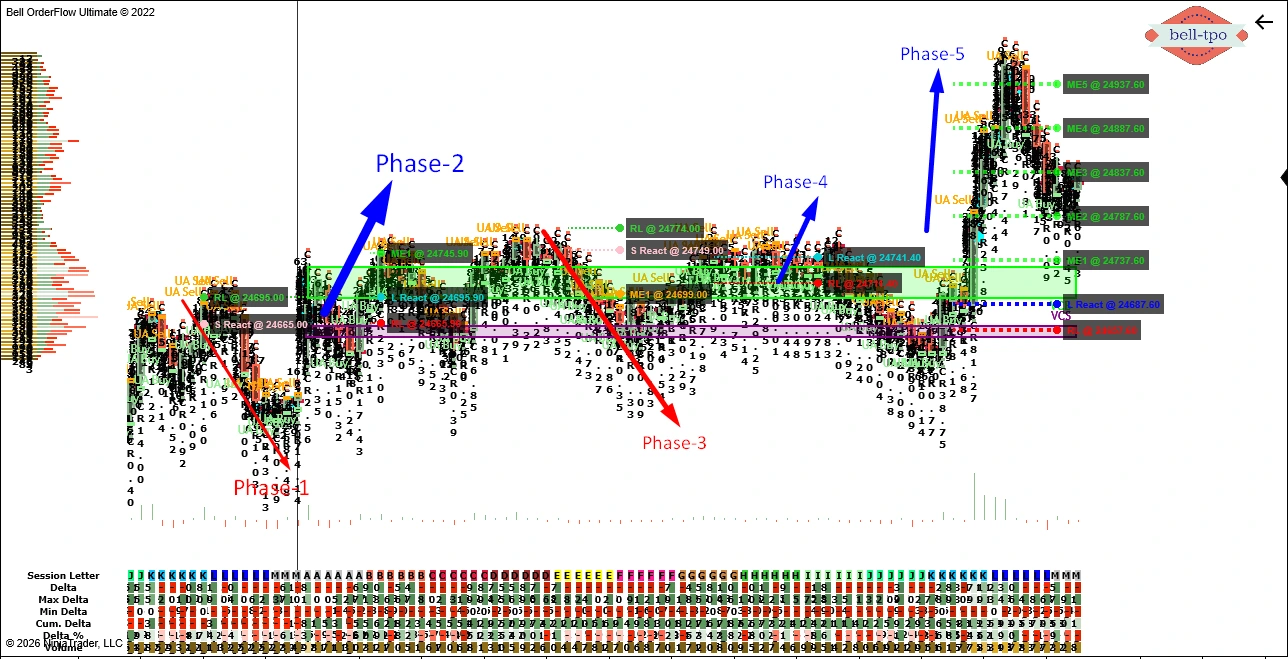
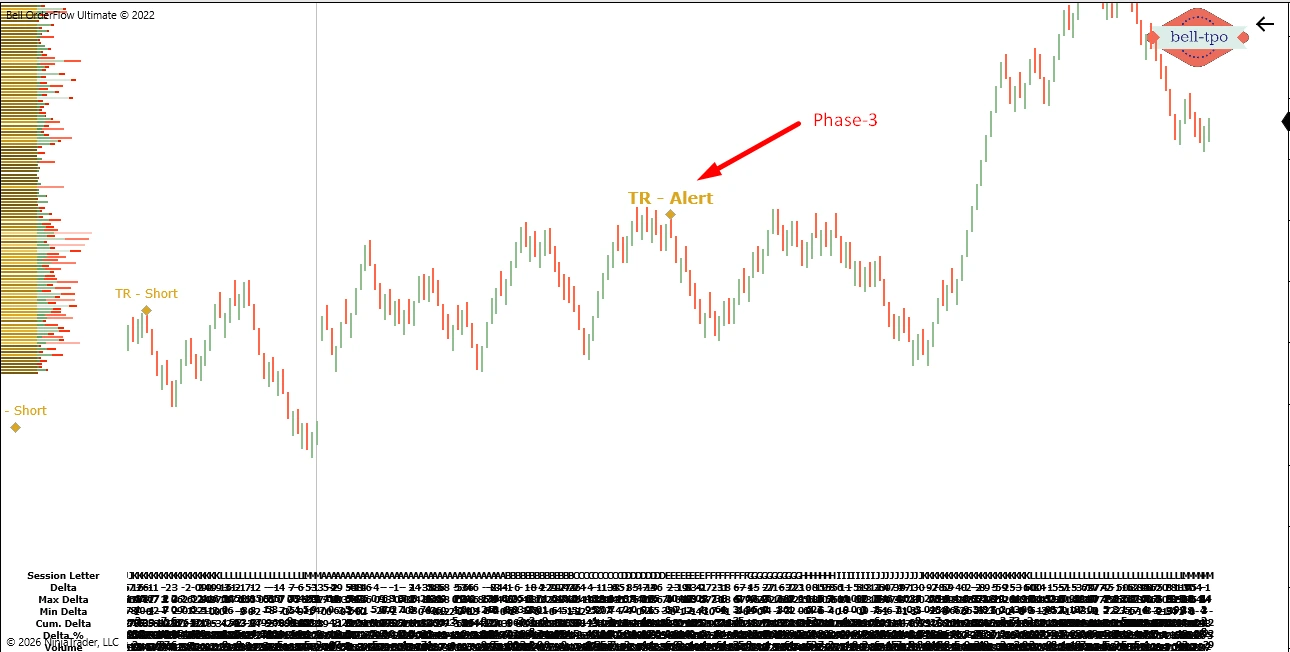
Market structure often unfolds in multiple phases where price reacts around well-defined levels. Using Bell Orderflow Ultimate, traders can observe how Price Reactions, Risk Limits, and Market Equilibrium levels guide the flow of the market.
In this session, NIFTY_I delivered a net 290 points opportunity, with multiple structured phases driven by VC, CR, and TR concepts.
Maximize Your Trading Edge with Bell Orderflow Ultimate Visit www.belltpo.com or reach out to us for more details.
Phase-1: Risk Limit Interaction (30 Points Range)
RL (Risk Limit @ 24695.00)
- Risk Limit acts as a protective boundary where invalidation is clearly defined. When price approaches this level, it indicates the maximum tolerance for the ongoing market condition.
- This level helps traders understand where the current market structure loses its validity and where caution becomes necessary.
S React (Short Price Reaction @ 24665.00)
- Price Reaction levels highlight the zones where the market begins to respond to orderflow imbalance. These reactions often signal the first shift in momentum.
- Such reactions provide early structural clues about whether the market may stabilize or attempt a reversal.
Phase-2: Structured Move with VC + CR (50 Points)
ME-1 (Market Equilibrium @ 24745.90)
- Market Equilibrium levels represent balanced price zones where participants temporarily agree on value. These levels often act as natural checkpoints during price movement.
- As price approaches equilibrium levels, the market may pause, consolidate, or transition toward the next structural level.
L React (Long Price Reaction @ 24695.90)
- Long Price Reaction zones indicate areas where demand begins to appear in the orderflow. These reactions help identify where the market is responding positively to participation pressure.
- They often serve as a structural reference showing where the market regained strength after testing lower areas.
RL (Risk Limit @ 24665.90)
- Risk Limit defines the structural boundary of the ongoing move. It provides clarity about where the market structure becomes invalid.
- Maintaining price above this level keeps the current structural bias intact.
Phase-3: Rotation with CR + TR (50 Points)
RL (Risk Limit @ 24774.00)
- Risk Limit once again acts as the structural invalidation point. When price interacts with this level, the market decides whether to continue or change direction.
- It helps maintain disciplined structure around the developing move.
S React (Short Price Reaction @ 24749.00)
- Short Price Reaction levels show where supply begins to influence price movement. These reactions highlight the areas where responsive participants engage with rising prices.
- Such levels often mark the beginning of rotational movement in the market.
ME-1 (Market Equilibrium @ 24699.00)
- Market Equilibrium continues to represent the value zone of the market. These levels often act as magnets for price during rotational phases.
- Price frequently stabilizes near equilibrium before deciding the next directional expansion.
Phase-4: Risk Limit Test (30 Points Range)
L React (Long Price Reaction @ 24741.40)
- This reaction level reflects the point where responsive participants attempted to support the market. It shows how orderflow responded as price revisited lower structural levels.
- Such reactions help confirm whether demand still exists in the market.
RL (Risk Limit @ 24711.40)
- Risk Limit remains the structural guardrail of the setup. It clearly defines the threshold where the current structure would lose strength.
- This helps traders maintain clarity and discipline during volatile phases.
Phase-5: Major Expansion Phase (250 Points Move)
ME-5 (Market Equilibrium @ 24937.60)
- Higher equilibrium levels indicate progressive value migration as the market expands. Each equilibrium level acts as a structural checkpoint during the move.
- They help traders understand how value is shifting upward during strong directional phases.
ME-4 (Market Equilibrium @ 24887.60)
- As price moves through successive equilibrium zones, the market demonstrates acceptance at higher values. This reflects sustained participation in the move.
- Such levels often become reference points for future reactions.
ME-3 (Market Equilibrium @ 24837.60)
- Mid-move equilibrium levels often act as pause zones where price consolidates briefly. These zones represent temporary balance between opposing participants.
- They also help measure the strength of the ongoing expansion.
ME-2 (Market Equilibrium @ 24787.60)
- Equilibrium levels lower in the structure often act as support references once price moves higher. They help track the progression of value migration.
- These levels remain critical reference zones even after the move develops.
ME-1 (Market Equilibrium @ 24737.60)
- The first equilibrium level in the expansion phase shows the initial value acceptance. This level typically acts as the base of the move.
- It often becomes a key structural reference for future sessions.
L React (Long Price Reaction @ 24687.60)
- This reaction level represents the area where strong participation response initiated the expansion. It marks the location where demand clearly outweighed supply.
- Such reactions often act as the foundation of large market movements.
RL (Risk Limit @ 24657.60)
- Risk Limit defines the structural boundary that protects the expansion setup. As long as price holds above this level, the broader structure remains intact.
- This level helps maintain clarity and risk discipline during large moves.
Conclusion
This session demonstrates how structured orderflow concepts combined with Market Equilibrium levels can reveal the underlying mechanics of market movement. By observing Price Reactions, Risk Limits, and Value Migration, traders can better understand how the market transitions from rotation to expansion phases. Bell Orderflow Ultimate helps visualize these structural shifts clearly, allowing traders to follow the flow of the market with objective reference levels.Maximize Your Trading Edge with Bell Orderflow Ultimate Visit www.belltpo.com or reach out to us for more details.